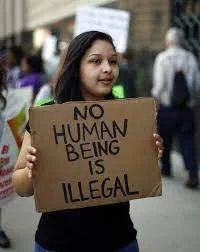

The Council welcomes yesterday’s decision by the Chief Magistrate to reject the Brisbane City Council‘s application to prohibit the protest march in the city this morning.
Read More
Stay up to date with the latest from the QCCL
The Council welcomes yesterday’s decision by the Chief Magistrate to reject the Brisbane City Council‘s application to prohibit the protest march in the city this morning.
Read MoreThe Premier today released a statement in which she said there was evidence that protesters were arming themselves with booby traps, which could harm those who remove the protestors from a place of protest.
Read MoreThe necessity for the reform of the law of bail contained in this Bill is made clear by the statistics that 80% of children in detention are on remand and only 16 percent of young people on remand go on to receive a custodial sentence and therefore the vast majority of them are spending unnecessary time in detention.
Read MoreIn other words, having regard to the unbearable pain and suffering of those with terminal or incurable illnesses a well-informed person could not reasonably reject VAD so long as it was only permitted in circumstances where all reasonable steps had been taken to protect the interests of the vulnerable
Read MoreThe Council supports a subjectivist approach to the criminal law. Subjectivism relies on the notion that individuals can be considered culpable for harm only where they were at the material time aware of the risk of causing that harm, and thus were able to avoid it. This means that it is important that the defendant voluntarily causes the outcome, either by consciously running the risk of that outcome or by actually intending it.
Read MoreQCCL President, Michael Cope says, “The QCCL welcomes the repeal of the 2016 medicinal cannabis legislation, which the Council believes has completely failed to deliver any useful outcomes to Queenslanders who could benefit from cannabis medicines.
Read More"Citizenship is person's basic right for it is nothing less than the right to have rights.”
“Citizenship is not a license that expires upon misbehaviour. Where does the principle underlying this legislation stop? Could a citizen be deprived of her nationality for evading tax or social security fraud?”
Read MoreA Human Rights Act is not a panacea, ultimately only an active citizenry can protect our rights and liberties. However, the Act will provide a new tool that citizens of this State can use to protect themselves. Perhaps more importantly, it will force decision-makers to consider the particular circumstances of each individual, about whom they have to make a decision. That must result in better decisions and better government.Despite our criticisms, we are of the view that this Bill represents a bold reform and this is not the time to allow the perfect to be the enemy of the good.
Read MoreA Human Rights Act is not a panacea, ultimately only an active citizenry can protect our rights and liberties. However, the Act will provide a new tool that citizens of this State can use to protect themselves
Read MoreWhy is supply such a problem? Because state laws enacted in 1971-1972 introduced an
ideological schism between possession and supply that demonized supply, resulting in ever increasing penalties for supply at the same time as there was a gradual relaxation of penalties for possession and use. The demonization has been so effective that black market compassionate and grow-your-own suppliers are now treated as if they are master criminals.
Read More“The algorithms which underlie this technology, have at their heart arbitrary concepts of what is normal. People are selected for attention by authorities on the basis of their supposedly abnormal behaviour or appearance.” Mr Cope said
Read More
Domestic and family violence is an ongoing scourge in our community. We do not think it necessary to repeat what is already well-known about the level of family and domestic violence and the harm that it does. These statistics are in any event, well summarised in the discussion paper.
However from a Civil Liberties point of view whilst the prevention of harm is a necessary condition for government to take action it is not a sufficient condition.
ln taking action to protect members of the community from harm, the state has to have regard to the
rights and liberties of other individuals. ln particular, before interfering with the rights and liberties of others it is that fundamental that the State demonstrates that the proposed measure will be effective at protecting the members of the community it is intended to protect.
Many if not all of the erosions of civil liberties over the last five decades were modelled in Nixon’s War on Drugs and the subsequent Reagan War on Drugs. Well before the sex offender and anti-terrorism laws: mandatory sentencing; reverse onus of proof; warrantless invasion of homes based on reasonable suspicion; proceeds of crime laws allowing
confiscation without conviction; phone tapping laws; cash transaction laws; and ‘civilisation’
of crime generally by replacing the criminal standard with the civil standard of proof
Read More“CCTV is a cheap way for politicians to be seen to be doing something to reduce crime. But it creates a false sense of security for the public.”
Read MoreIt is extremely alarming that some parts of our government seem to think they should be protected from scrutiny by the elected representatives of the people of the country. This is an anathema to any Democrat.
Read MoreThe QCCL unreservedly condemns all forms of racial vilification and discrimination. However in the Council’s view, it is another thing to make the expression of such views illegal
Read MoreMany if not all of the erosions of civil liberties over the last five decades were modelled in Nixon‟s War on Drugs, well before the sex offender and anti-terrorism laws: mandatory sentencing; reverse onus of proof; warrantless invasion of homes based on reasonable suspicion; proceeds of crime laws allowing confiscation without conviction; phone tapping laws; cash transaction laws; and „civilisation‟ of crime generally by replacing the criminal standard with the civil standard of proof
Read MoreThe major flaw in the Bill is supply. The Victorian Law Reform Commission report on medicinal cannabis identified this as a key problem and recommended that Victoria organise its own cannabis industry, from cultivation to prescription. This recommendation was incorporated into the Victorian legislation. It is very hard to see how the Qld Bill can work without addressing this issue.
Read MorePresident Nixon’s classification of cannabis as an illegal drug on a par with heroin had not the slightest relationship to any credible contemporary medicine or science.
Read More